
How much does an exterior repaint cost
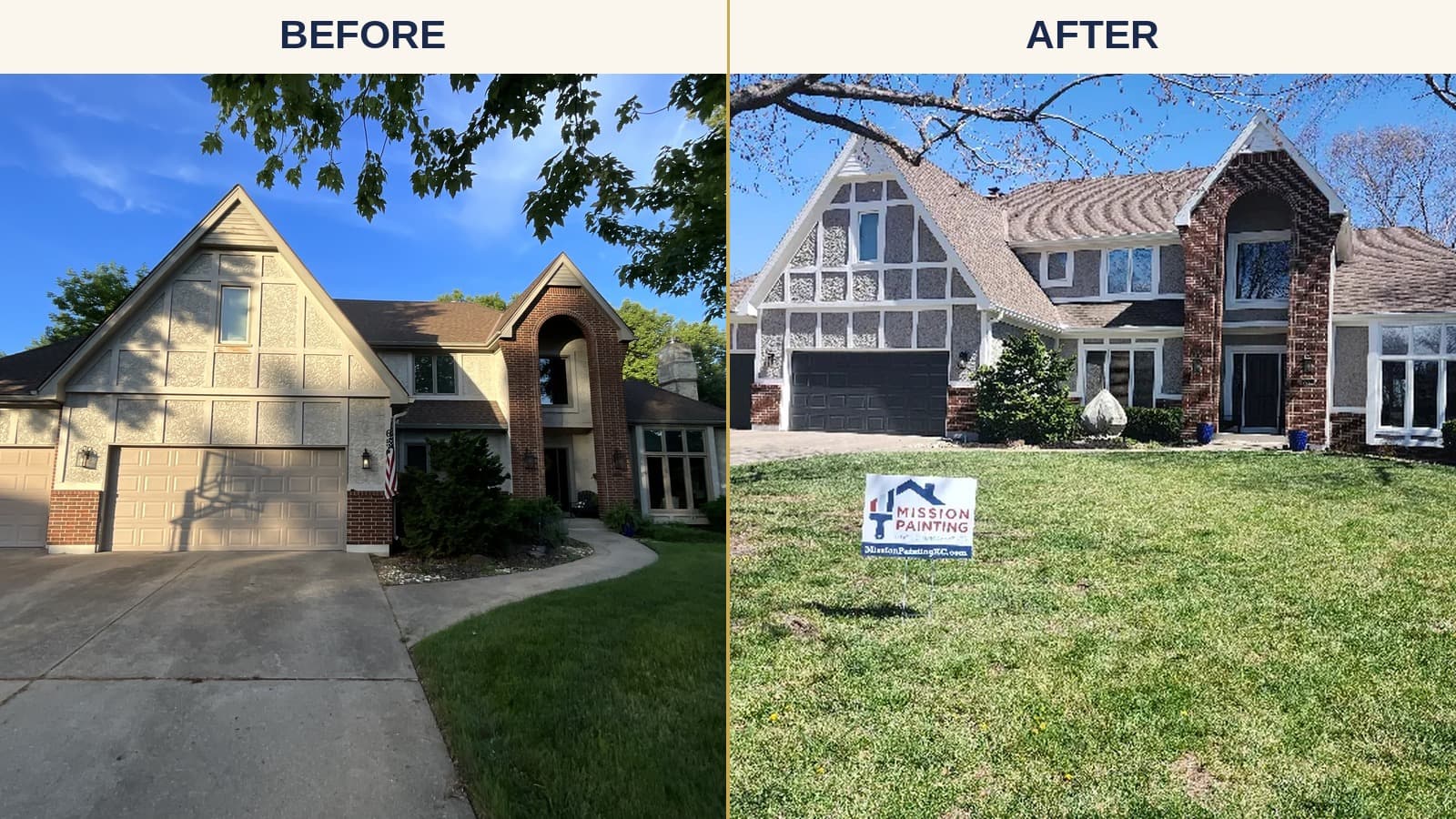
How Much Does an Exterior Repaint Cost in Kansas City?
If you've collected exterior painting quotes in Kansas City, you've probably had this experience: three contractors walked the same house, and the bids came back at $4,500, $11,200, and $18,000. Same house. Same scope. Three numbers that don't make sense together.
You're not imagining it. The painting industry has one of the widest pricing spreads of any home services category. Recent industry data shows that when the same exterior repaint is quoted across multiple contractors, the spread between the lowest and highest bid runs around 84% in the Midwest — meaning the high quote can be six times the low quote on the exact same house.
This post is the honest explanation for that variability — what a quality exterior repaint actually costs in Kansas City when a company runs real systems, and what you trade off if you choose a cheaper path.
Why the spread is so wide
The painting industry contains operators at every level of business maturity, and the differences between them aren't about company size — they're about systems:
- Weekend painters working cash side-jobs around their day jobs — no business infrastructure for warranty, insurance, or long-term support
- Operators without documented systems — often skilled crews, but no standardized processes for sales, scope, prep, application, communication, or warranty
- Operators with partial systems — some phases are documented, others are handled ad hoc, with inconsistency from crew to crew or job to job
- Fully systematized operators — documented standard operating procedures across every phase, dedicated roles, technology platforms, and multi-year warranties that get honored, regardless of company size
All four of those can paint your house. The quote you get from each is a reflection of their cost structure, overhead, and the level of service they're prepared to deliver. A lower price isn't automatically a problem — but it always comes with trade-offs, and most homeowners don't see those trade-offs until well after the paint dries.
What a quality exterior repaint actually costs in Kansas City
When you're looking at a contractor that runs documented prep standards, applies two coats of premium paint, carries full insurance, offers a multi-year warranty, and assigns active project management, here's what you should expect to spend in the Kansas City metro:
- Under 2,000 sq ft — 2–3 bedrooms, 1–2 bathrooms (ranches and smaller 1.5-story homes). Quality repaint: $4,500 – $7,500
- 2,000 – 2,800 sq ft — 3 bedrooms, 2–2.5 bathrooms (most KC two-story family homes). Quality repaint: $7,500 – $13,000
- 2,800 – 4,000 sq ft — 4+ bedrooms, 3+ bathrooms (larger two-story homes with more trim). Quality repaint: $11,000 – $19,000
- 4,000+ sq ft / complex — 5+ bedrooms, three-story or mixed substrates, complex trim and architecture. Quality repaint: $17,000 – $30,000+
These ranges assume:
- Two coats of premium paint (Sherwin-Williams Duration or Benjamin Moore Regal Select Exterior, or equivalent)
- Full surface prep — pressure wash, scrape, sand, prime bare wood, and caulk
- A documented written scope with transparent pricing
- General liability and workers' compensation insurance
- A written multi-year warranty
- A dedicated project manager and daily communication
Quotes well below these ranges are usually telling you something about what's being cut. Quotes well above usually reflect either complexity the contractor saw that others missed, or premium positioning. Both can be legitimate. The middle is where most fully systematized companies live, and where the math tends to work for both sides.
What you trade off at lower price points
Lower-cost options exist, and for some homeowners they're the right call. A landlord prepping a rental for re-lease has different priorities than a homeowner painting their forever home.
Cash deals and weekend painters. The single biggest trade-off is time. Side-job painters work evenings and weekends around their day jobs. A house that a full-time crew finishes in five business days can stretch to four or six weeks on a weekend schedule, weather permitting. That extended timeline matters when you're trying to sell, host an event, or simply not have your home in production for a month. The other major trade-offs are insurance and recourse. Most weekend painters don't carry general liability or workers' compensation insurance — meaning if something goes wrong (a fall on your property, paint on a neighbor's car, damage to your siding), the financial responsibility may end up on your homeowner's policy or with you directly. And there's typically no written warranty. If the paint fails in eighteen months, there's no one to call.
Operators without documented systems. These are often skilled painters who built a real business but never invested in documented processes — what gets done, how it gets done, who's responsible at each phase. Without those systems, quality varies day to day depending on who's holding the brush. You don't always know whether bare wood got primed, whether mildew got treated on shaded elevations, or whether caulk got applied correctly to the gaps that matter. A warranty might exist on paper, but enforcement depends on whether the operator is still in business when you need to call.
Operators with partial systems. Some companies have built systems for parts of the operation but not others — maybe sales is dialed in, but field execution varies, or the proposal process is rigorous but warranty claims are handled ad hoc. The quote may be competitive, but the experience can be inconsistent depending on which crew shows up, whether you get a dedicated point of contact, and whether the company has the operational bandwidth to honor warranty claims years later.
Fully systematized operators. The trade-off here is upfront price. You're paying for the cost of running documented processes across every phase, full insurance, technology, dedicated project management, and a business structure built to honor commitments years from now. This isn't about company size — small operators can be fully systematized, and when they are, the pricing reflects the cost of operating that way. Whether that premium is worth it depends entirely on how long you plan to own the home and how much risk you want to carry.
A specific example: wood rot repair
Almost every exterior repaint in Kansas City uncovers at least some wood rot — usually around fascia boards, soffit corners, window sills, garage door trim, or wherever water has been finding its way over the years. How a contractor handles that discovery is one of the clearest tells for which tier of operator you're working with.
The cheap path: Paint over it. Caulk the soft spot, prime, and topcoat. The job looks beautiful in the photos. The next homeowner inspection might catch it; it might not. Either way, the underlying problem — water finding a path past the cladding — keeps doing its work.
The quality path: Cut out the rotted material, replace with new wood, prime, caulk to seal the joint properly, then paint. This adds real cost to the proposal — anywhere from a few hundred dollars for a single fascia repair to a few thousand for substantial soffit or trim replacement.
That added cost is the trade-off most homeowners don't see at quote time. Here's why it matters.
When rotted wood gets painted over, the entry point for water doesn't disappear. Over the next few years, moisture continues migrating through the failed wood into the wall cavity behind it. Sheathing, insulation, and framing start getting wet. In Kansas City's humidity and freeze-thaw cycles, that wet cavity becomes a mold environment. By the time a homeowner notices interior signs — a musty smell, peeling paint near a baseboard, a dark spot on the drywall — the repair scope has changed entirely. The fix is no longer "replace some bad wood." It's now siding off, sheathing replaced, framing dried or replaced, insulation removed, drywall repaired, and the entire elevation repainted inside and out.
In our experience, the proper wood rot fix at the time of repaint typically runs 7x to 10x less than the elevation rebuild that becomes necessary if it gets covered up. A $2,000 wood rot repair added to the original proposal becomes a $15,000–$20,000 reconstruction project two or three years later.
That's the principle. Here's what it actually looks like.
A recent example from a Kansas City home
A homeowner called us out for what looked like a small rot fix on one trim board. As soon as we opened up the area to make the repair, the actual problem revealed itself.
The previous contractor had wrapped aluminum cladding over the brick molding around all four windows on that elevation — visually clean, but on three of those windows the wood underneath was 100% rotten. The fourth was 60% gone. Water had been moving past the wrapped trim for years.
Behind the stucco facade, the second-story OSB sheathing was completely rotten and saturated. The first-floor sheathing was rotten and soggy. The polyisocyanurate insulation behind the sheathing showed clear water damage and untaped joints from the original install. What started as a single trim board became a complete tear-off of the stucco facade and full reconstruction with LP SmartSide and new trim.
The project manager assigned to this job paused work the moment the scope of damage became clear, documented every layer with photos, walked the homeowner through the corrective options and pricing, and waited for the homeowner's authorization before any additional work moved forward. No surprise change order. No work first, conversation later.
Total cost to properly repair: $29,000.
Had the rot been addressed when the previous contractor first wrapped the trim — replacing the wood instead of covering it — the cost would have been a small fraction of that.
A note on aluminum wrap, since this case turns on it: wrapping fascia, soffits, columns, and trim in aluminum is a perfectly legitimate upgrade when it's done over sound wood. Done right, it eliminates future painting on those components and protects them long-term. What makes it a problem is when it's used as a cover-up to hide failing wood from a homeowner who would have asked the right questions if they'd seen the rot directly. The aluminum doesn't fix anything underneath — it just hides what's happening until the bill comes due.
If you want to understand why one failed trim board can cascade through every layer of your exterior wall — cladding, sheathing, insulation, framing — that's a deeper topic than this post can cover. We'll have a dedicated post on how your home's building envelope works coming soon.
The math over time
Wood rot is one example. Paint failure itself is another. Consider two scenarios on the same 2,400 sq ft home:
- Option A: $5,500 from a weekend painter. One coat, basic prep, no warranty. Looks great in year one. By year three, the south and west elevations are chalking and fading. By year five, you're repainting — and the second prep is more expensive because the failing surface needs more work.
- Option B: $12,500 from a fully systematized company. Two coats, full prep, multi-year warranty, mid-year touch-up included. Still looks new in year five. Likely good through year eight or nine.
Annualized, Option A costs about $1,100 per year of useful life. Option B costs about $1,400 per year — but with no surprise repaint event, no escalating prep cost on a failing surface, and a written warranty you can actually call on.
The cheaper option is genuinely cheaper if you're flipping the house in two years or you're comfortable repainting more often. It's more expensive if you're keeping the home, value your time, and want predictability.
How to evaluate any exterior painter
Whatever direction you're leaning, these are the questions that surface quality regardless of price:
- Are you licensed and insured? Ask for proof of general liability and workers' compensation. A reputable contractor sends both without hesitation.
- What's included in your prep? A vague answer is the answer. Look for specific language about pressure washing, scraping, sanding, priming bare wood, mildew treatment, and caulking.
- How do you handle wood rot when you find it? Most Kansas City repaints uncover at least some rot. The answer reveals whether they'll fix it or cover it up — and a real contractor walks the property looking for it before they quote. Then ask the follow-up: what happens if you find more rot after work has already started? A good answer names a specific person — typically a dedicated project manager — who pauses work, documents the discovery with photos, walks you through the corrective options and pricing, and waits for your decision before authorizing any additional work. A bad answer is vague: "we'll talk to you about it," "the crew lead handles it," or silence.
- What paint product are you using, and how many coats? Brand and product line matter — Sherwin-Williams Duration or Emerald, Benjamin Moore Regal Select or Aura, and the equivalent premium lines are designed for the Kansas City climate. So does coat count, especially on deep tones.
- Can you see the scope and the pricing components? A real proposal makes the work transparent. Some contractors itemize by surface (body sqft, trim linear feet, prep tasks); others itemize by quality tier (Good/Better/Best, each showing specific paint, coats, prep level, and warranty) plus optional add-ons and deducts as separate line items. Both approaches work — what matters is that you can see exactly what you're paying for and what would change the price. A one-line "exterior painting — $X" with no documented scope is the red flag.
- What does your warranty cover, and how do I claim it? A two-year warranty in writing is meaningful. A "lifetime warranty" with no documented claims process is marketing.
- Who is my point of contact during the job? "The owner will check in" is not a process. A dedicated project manager and a written communication cadence is.
- Can you show me three references from jobs more than two years old? Anyone can produce a fresh-paint photo. Two-year-old jobs tell you whether the work holds up.
If a contractor can answer all eight without hedging, you're likely looking at a real operation regardless of where they fall on the price spectrum. If they hedge on three or more, you have your answer.
How Mission Painting fits
Mission Painting is a small Kansas City company that has chosen to be fully systematized. We invest in documented systems across every phase — sales, scope, prep, application, daily communication, and warranty support — because that's how you deliver excellence consistently. Systems aren't about being big. They're about better outcomes.
What that looks like in practice: three transparent tiers — Good, Better, and Best — each aligned to industry-best practices refined through thousands of real Kansas City homes. Two coats of premium paint on every Better and Best project, drawn from Sherwin-Williams and Benjamin Moore product lines built for our climate. Documented prep checklists. Daily photo updates through our project management platform. Written warranties from one to five years depending on tier.
Every Mission Painting proposal presents all three tiers side by side, with the specific inclusions for each — paint product, coat count, prep level, warranty term — plus any optional add-ons or deducts as separate line items. You can see exactly what you're getting at each price point, and exactly what would change if you wanted to add or remove something.
Every Mission Painting project follows a two-role structure designed to give you the right person at the right time. Your estimator walks the property, scopes the work, and prepares your itemized proposal. Once you accept the proposal and we move into scheduling, you're introduced to your dedicated project manager — who coordinates all field work and on-site activity, communicates with you daily during the project, and serves as your primary point of contact from kickoff through final walkthrough.
On wood rot specifically: your estimator walks the property looking for visible rot before we write a proposal, and we include the repair scope they can identify in the itemized bid. But Kansas City has plenty of older homes, and there are times when the full extent of wood rot can only be confirmed once we open up an area to work. When that happens, your project manager — the same person you've been communicating with since the work began — pauses the crew, documents what we found with photos, walks you through the recommended corrective actions and their pricing, and waits for your decision before authorizing anything further. Not a crew lead you've never met. Not an automated email after the fact. No surprise on the final invoice.
We're not the cheapest exterior painter in Kansas City, and we don't try to be. We're the company that builds the system — and staffs the roles — so the result is predictable, the warranty means something, and you have a single point of contact three years from now if something needs attention.
If you're shopping for an exterior repaint, get three quotes. Run the eight questions above against each one. Compare the answers — not just the dollar figures. And when you're ready for our number, our estimate tool will give you a ballpark in three minutes:
Mission Painting serves the greater Kansas City metro including Leawood, Mission Hills, Prairie Village, Overland Park, Shawnee, Olathe, Lee's Summit, Liberty, Blue Springs, and Parkville. Questions? Call (913) 647-7466.
Ready to Transform Your Home?
Get a free, detailed estimate with no deposit required. See why Kansas City homeowners trust Mission Painting.
Get Your Free Estimate